

HomeGrown Solution: Helping Hands: Cost Effective Pediatric Simulation
Title
Helping Hands: Cost Effective Pediatric Simulation
Submitted by
Cassie Burks, Alissa Parrish
HomeGrown Solution Number
Category
Identification of the Problem
Pediatric IV insertion is an important skill to practice. Nursing students have limited access to pediatric insertion opportunities because of clinical restrictions. Additionally, pediatric simulators are not only costly but also require extended lab hours to accommodate all students.
Unique Idea
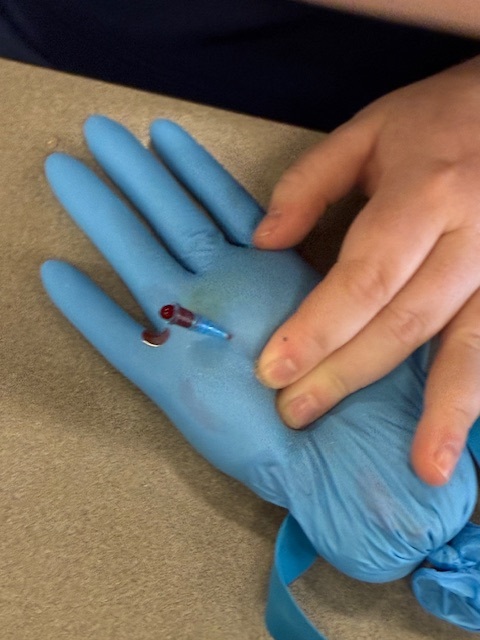
Helping Hands is an affordable pediatric IV simulator designed to allow all students to practice IV insertion simultaneously. These simulators are easy to assemble using readily available supplies. When a student successfully inserts an IV into the Helping Hands simulator, they receive immediate blood flashback. To maintain realism and prevent blood spillage, the student must promptly connect the cathlon to the INT, enhancing the fidelity of the training experience.
Objectives
- Share how to create a cost effective pediatric IV simulator that allows for simultaneous IV insertion opportunities for large student groups.
- Student learning outcome: Demonstrate appropriate IV insertion techniques in the pediatric patient.
Supplies/Ingredients
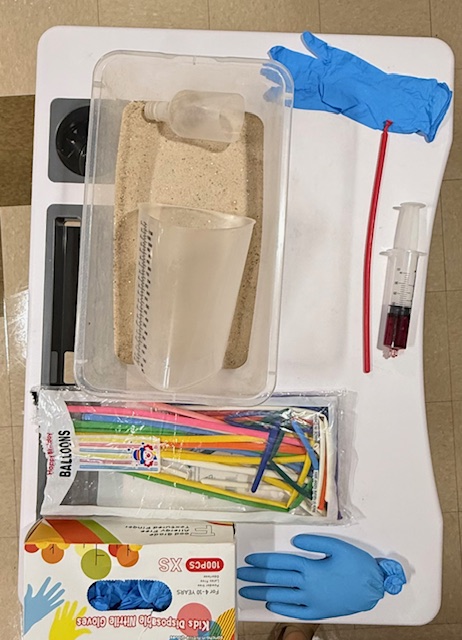
- Long balloons
- Child gloves (extra small)
- Simulated blood
- Sand
- Funnel
- Large syringe
- Intermittent intravenous access device (INT)
- Scissors
- Container for sand
Steps to Creating the Solution
1. Gather supplies.
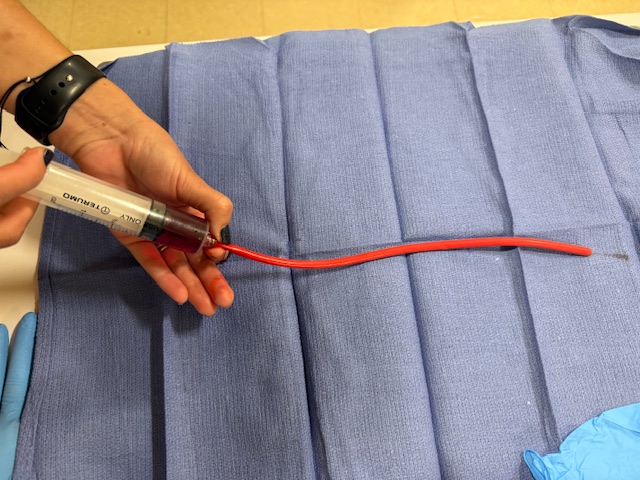
2. Fill balloons with simulated blood (we like using a large syringe & an INT).
3. Tie balloon.
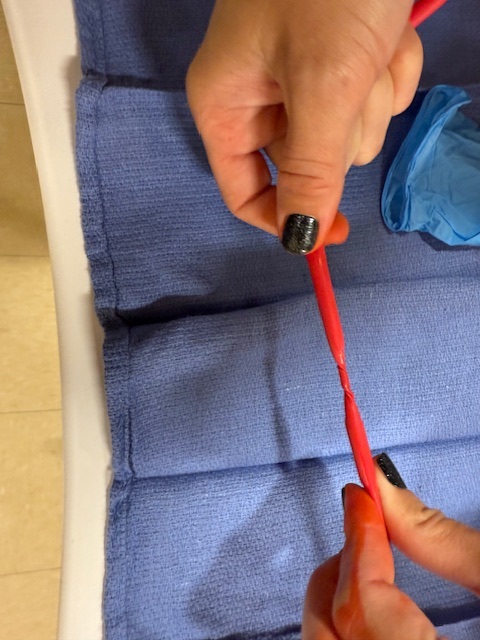
4. Twist balloon in the middle to create pressure on each end.
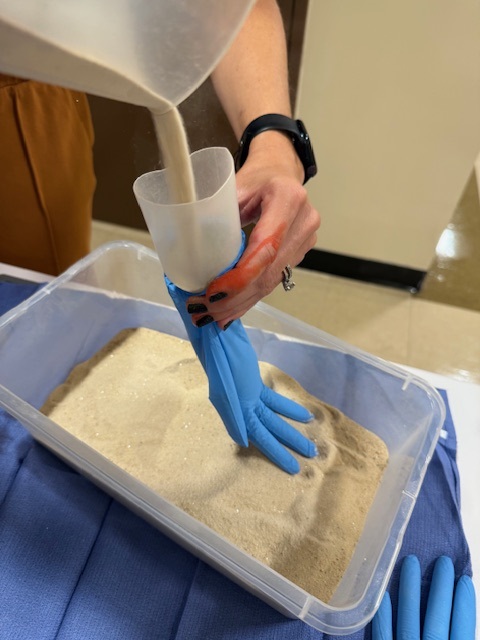
5. Insert balloon into glove.
6. Insert sand into glove using a funnel.
7. Bring vein (balloon) towards glove surface.
8. Tie glove.
Image
Video
HomeGrown Disclaimer
The information contained within this website is for information purposes only. While the website is monitored in an attempt to keep the information up to date and accurate, be aware that there are no representations or warranties of any kind, express or implied, about the completeness, accuracy, reliability, and/or suitability being made. The sponsors of this website are not liable for any loss or damage that may result from using information contained within this website. Any reliance you place on the information contained within this website is strictly at your own risk.
Please note that sections of this website include postings of individuals not associated with the website sponsors. These postings are not endorsed or warrantied by the website, and use of such information is at your own risk.
Always check the user guide/manuals provided by the manufacturer of your manikin or task trainer. Using products that are not sanctioned may invalidate the product warranty. (For example: Some products could stain the skin on a manikin. Liquids used around electrical parts may cause malfunctions.)