

HomeGrown Solution: Shift Happens: A Continuity-of-Care Simulation Model for Communication
Title
Shift Happens: A Continuity-of-Care Simulation Model for Communication
Submitted by
Alexa-Marie Ramirez
Identification of the Problem
Traditional simulation often assigns one student group to a patient from start to finish. While effective for skill performance, this model does not reflect real-world nursing practice where care is transferred across shifts. As a result, students have limited opportunities to practice: Bedside shift reporting, Structured SBAR communication, Continuity-of-care accountability, and Recognition of communication-related patient safety risks. High-acuity conditions such as pediatric Diabetic Ketoacidosis (DKA) require precise monitoring and coordinated communication across multiple nursing shifts. Simulation frequently lacks this longitudinal care component.
Unique Idea
This solution is unique because it enhances realism through structured scenario design alone, without additional equipment, hardware, or technology. This solution intends to present the shift-based phase model as a general framework that can be applied across many simulation scenarios and applied across multiple levels of nursing students and adjusted based on the learner’s knowledge level. If applicable, recording of the simulation is recommended.
Instead of running three separate simulations, one patient case evolves across multiple groups. This design Mimics real hospital shift transitions, Forces accountability for communication clarity, highlights how errors compound across shifts, and emphasizes patient safety and continuity. The innovation lies in restructuring time and responsibility rather than adding cost.
Objectives
- Demonstrate structured SBAR communication when reporting to providers during pediatric DKA management.
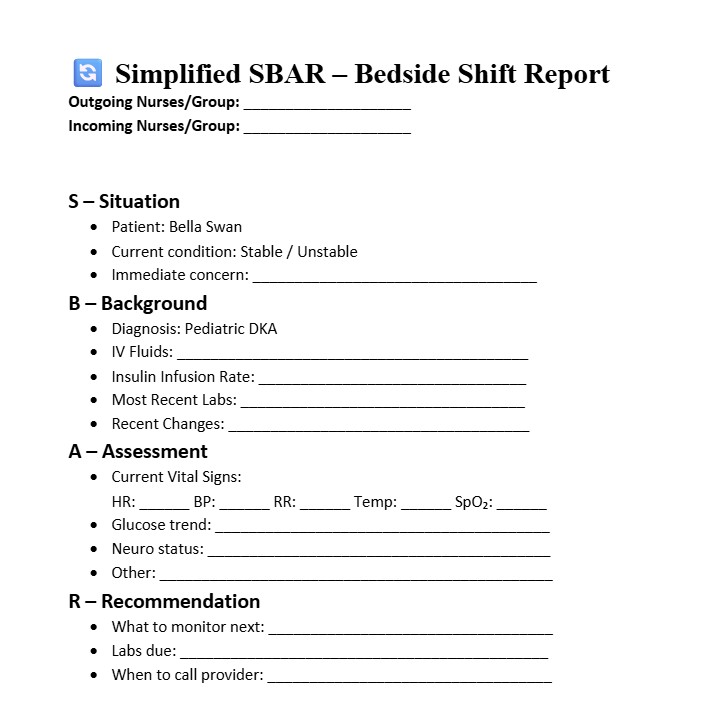
- Perform accurate bedside shift report utilizing the simplified SBAR format including vital signs, laboratory trends, insulin management, neurologic status, and pending interventions to promote consistency between nurse-to-nurse handoffs.
- Demonstrate clinical reasoning and judgment by interpreting patient assessment findings, laboratory values, and trends in condition to guide evidence-based nursing management of pediatric DKA.
- Prioritize and communicate appropriate nursing interventions based on patient status, clinical trends, and anticipated complications during evolving phases of care.
Supplies/Ingredients
- Printed SBAR/bedside handoff report template (simplified format)
- Prework assignment in Forms format (for content review and communication expectations)
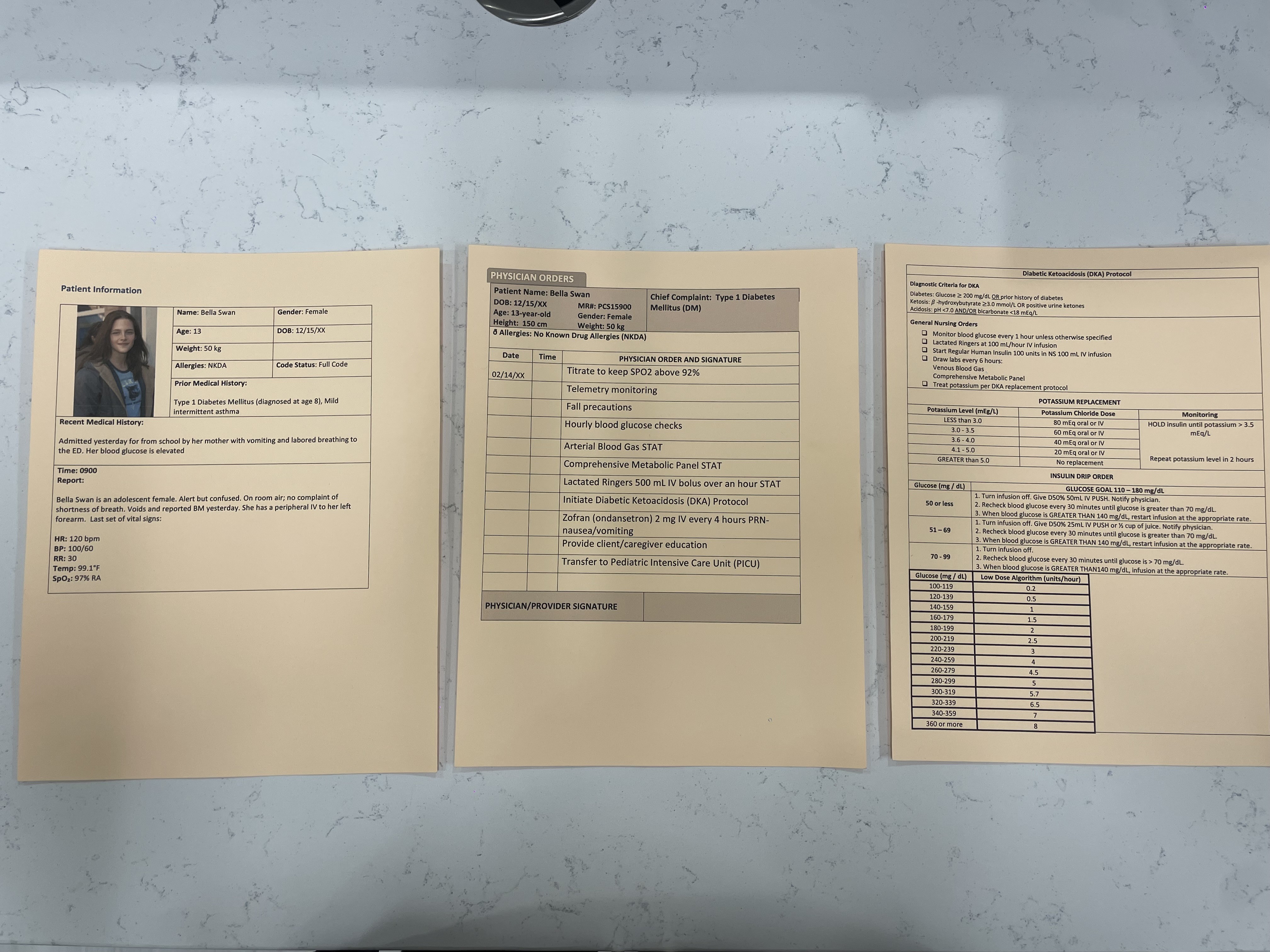
- Printed patient chart (for prebrief review and simulation use)
- Simulation case scenario (complex case; see example)
- Structured phase timeline document (defines shift segments and patient progression; see ‘DKA PEDI Rapid Report SIM Settings’ example).
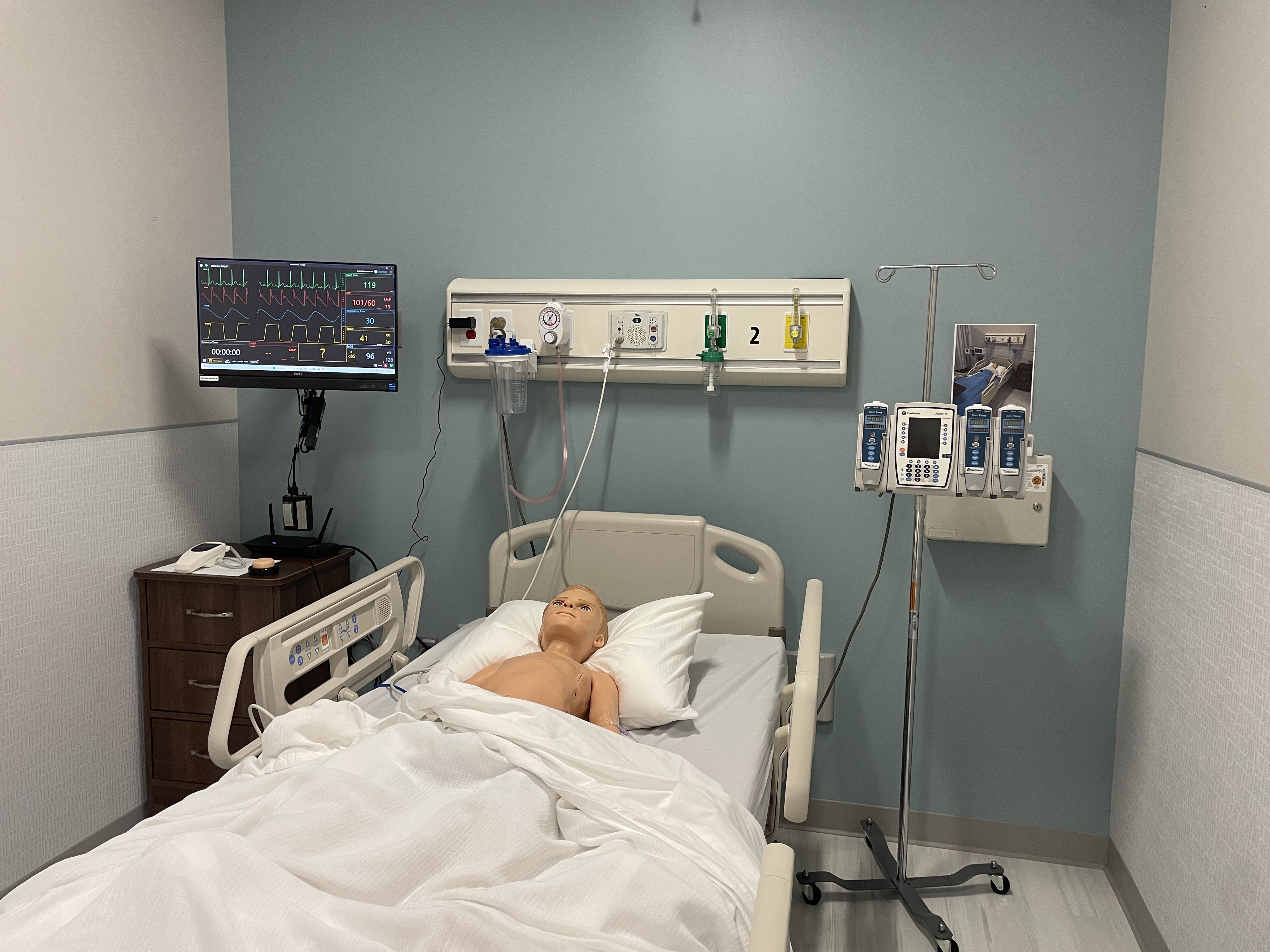
- Patient manikin
- Basic simulation props (e.g., hospital gown, blanket, bedside monitor display, IV pump, nasal cannula)
- Recording software (for simulation capture and review)
- Simulated participants (optional)
Steps to Creating the Solution
1. Define Time-Based Care Phases.
- Use an existing complex case simulation to divide into time-based care phases.
2. Pre-Plan Patient Progression by Learner Level.
- Pre-plan how the patient’s condition evolves based on learner level (improvement with correct management, deterioration with delays).
- Specify clinical priorities and expected nursing actions for each phase.
- For beginning students, focus on basic patient assessment, vital signs, recognition of abnormal findings, and simple bedside handoff communication.
- For intermediate students, include interpretation of laboratory values, medication administration, prioritization of interventions, and more detailed SBAR communication.
- For advanced students, add complexity such as rapid deterioration, multiple complications, prioritization of competing tasks, medication titration, and independent clinical decision-making.
3. Develop Structured Bedside Shift Reports.
- Develop structured bedside shift reports to follow the simplified SBAR structure to promote consistency between nurse-to-nurse handoffs.
- Distribute the printed report templates to each group.
- Bedside Handoff Report: Include current situation, relevant DKA background, assessment findings (vital signs, glucose trends, neurologic status, laboratory values), and recommendations for the next shift.
- Simplified SBAR Elements: Emphasize changes in patient status, pending lab results and interventions, and clarifying questions during handoff
4. Assign Student Roles by Shift.
- Divide students into groups, with each group representing a different nursing shift.
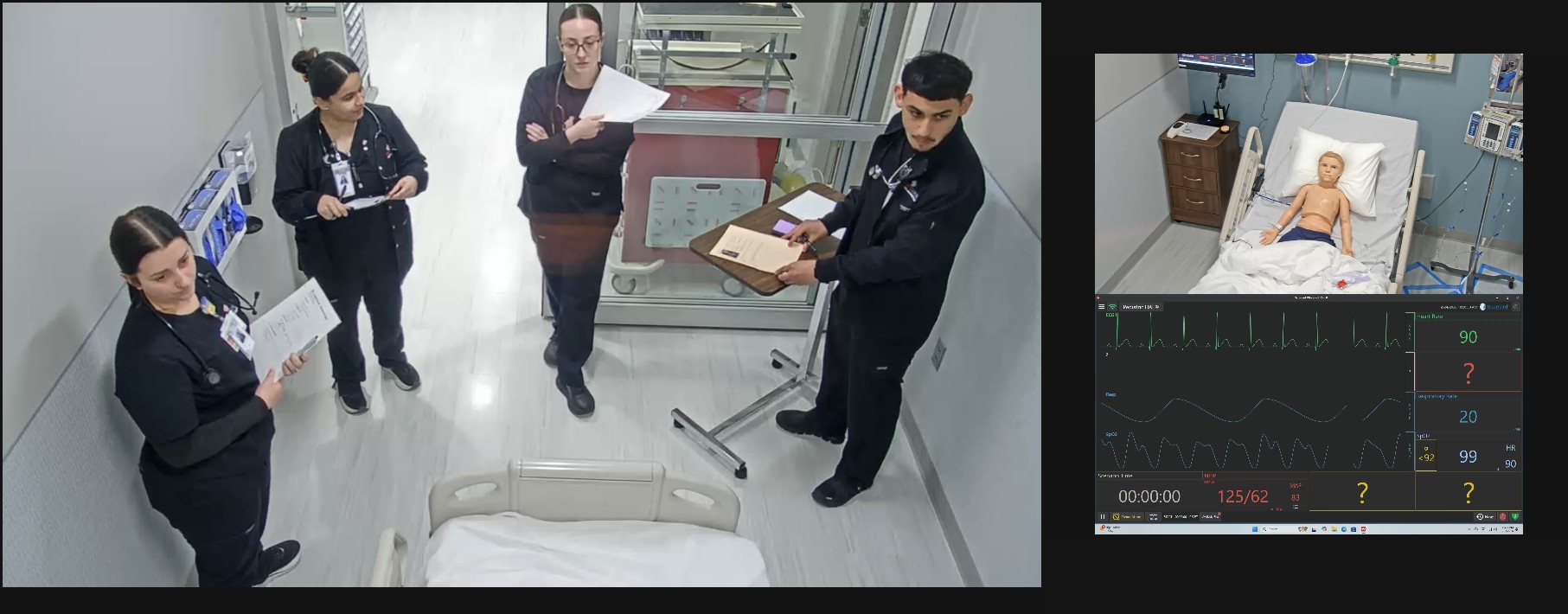
5. Set Up Video Recording.
- Record the full session, capturing bedside handoff, SBAR communication, team collaboration, and clinical decision-making.
6. Conduct Structured Debrief and Reflection.
- Conduct a structured debrief using video replay or recording to evaluate inclusion of key SBAR elements (changes in patient status, pending labs and interventions, and clarifying questions).
- Have students complete a brief self-reflection to identify strengths, missed information, and opportunities for improvement.
Files
Images
HomeGrown Disclaimer
The information contained within this website is for information purposes only. While the website is monitored in an attempt to keep the information up to date and accurate, be aware that there are no representations or warranties of any kind, express or implied, about the completeness, accuracy, reliability, and/or suitability being made. The sponsors of this website are not liable for any loss or damage that may result from using information contained within this website. Any reliance you place on the information contained within this website is strictly at your own risk.
Please note that sections of this website include postings of individuals not associated with the website sponsors. These postings are not endorsed or warrantied by the website, and use of such information is at your own risk.
Always check the user guide/manuals provided by the manufacturer of your manikin or task trainer. Using products that are not sanctioned may invalidate the product warranty. (For example: Some products could stain the skin on a manikin. Liquids used around electrical parts may cause malfunctions.)